
How to Spot Spoiled Whiskey: Signs, Causes & Prevention
Whiskey is one of the most enduring spirits in the world—celebrated for its robust flavors, complex aromas, and long shelf life. Thanks to its high alcohol content, many enthusiasts assume whiskey lasts forever. But here’s the truth: while whiskey is impressively stable, it’s not completely immune to going bad. Under the wrong conditions, its quality can deteriorate, leaving you with a disappointing pour.
In this guide, you’ll learn how to tell if whiskey has gone bad, the common causes of spoilage, and how to store whiskey properly so every sip stays as smooth as intended.
Can Whiskey Go Bad?
Unopened whiskey stored correctly can last for decades without losing quality. But once opened, it begins a slow interaction with air, light, and temperature shifts that can change its character over time. While it won’t “expire” like milk or juice, whiskey can become flat, harsh, or unpleasant if neglected.
What Causes Whiskey to Spoil?
Several factors can negatively impact the flavor, aroma, and appearance of whiskey:
Oxidation – Once a bottle is opened, oxygen starts breaking down the spirit. Over time, this dulls its complexity and balance.
Light Exposure – Direct sunlight or UV light degrades whiskey compounds, fading color and altering flavor.
Temperature Fluctuations – Expanding and contracting liquid from heat or cold stresses the whiskey, leading to subtle spoilage.
Improper Sealing – Loose caps or damaged corks let in air and contaminants.
Contamination – Dust, particles, or improper handling can compromise whiskey’s purity.
How to Tell if Whiskey Has Gone Bad
Spotting spoiled whiskey isn’t always obvious, but paying attention to your senses can help:
Appearance – Look for unusual cloudiness, floating particles, or discoloration.
Smell – Whiskey should smell warm, rich, and inviting. If it gives off sour, metallic, or musty odors, it may be spoiled.
Taste – Flat, bitter, or harsh flavors are clear indicators of degradation.
Seal Integrity – Check the bottle. A damaged cork or loose cap signals long-term air exposure.
What Happens if You Drink Spoiled Whiskey?
The good news: drinking spoiled whiskey won’t make you sick the way spoiled food would. However, it will taste dull, harsh, or simply unpleasant. Instead of the smooth, layered notes whiskey is known for, you’ll be left with a lifeless or off-putting pour.
How to Prevent Whiskey from Spoiling
Proper storage is the key to preserving your favorite bottles. Here are some expert tips:
Store bottles upright to protect corks and prevent leakage.
Keep whiskey in a cool, dark place, away from direct sunlight.
Avoid temperature swings—steady room temperature is best.
After opening, aim to finish bottles within 1–2 years for peak flavor.
For collectors, consider using wine stoppers or vacuum sealers to slow oxidation in partially filled bottles.
Final Sip: Protecting Your Whiskey Investment
Whiskey may not expire like perishable foods, but it can lose its magic if not cared for properly. By learning how to recognize spoiled whiskey and storing it the right way, you’ll ensure every glass poured is as enjoyable as the distiller intended.
Whether you’re a casual drinker or a serious collector, knowing how to spot spoiled whiskey helps you get the most out of every bottle in your collection.

Preventative Methods
To preserve whiskey’s integrity, proper storage and handling are essential. Follow these best practices:
1. Store Upright:
Keep whiskey bottles upright to prevent cork interaction with the liquid, which can degrade the seal.
2. Control Temperature:
Store whiskey in a cool, consistent environment (50–60°F) away from extreme fluctuations.
3. Minimize Light Exposure:
Keep bottles away from direct sunlight or UV light to protect the whiskey’s compounds.
4. Seal Properly:
Always close bottles tightly to limit air contact.
5. Consider Decanting:
Transfer to smaller bottles as the liquid decreases to reduce air exposure in partially filled bottles.
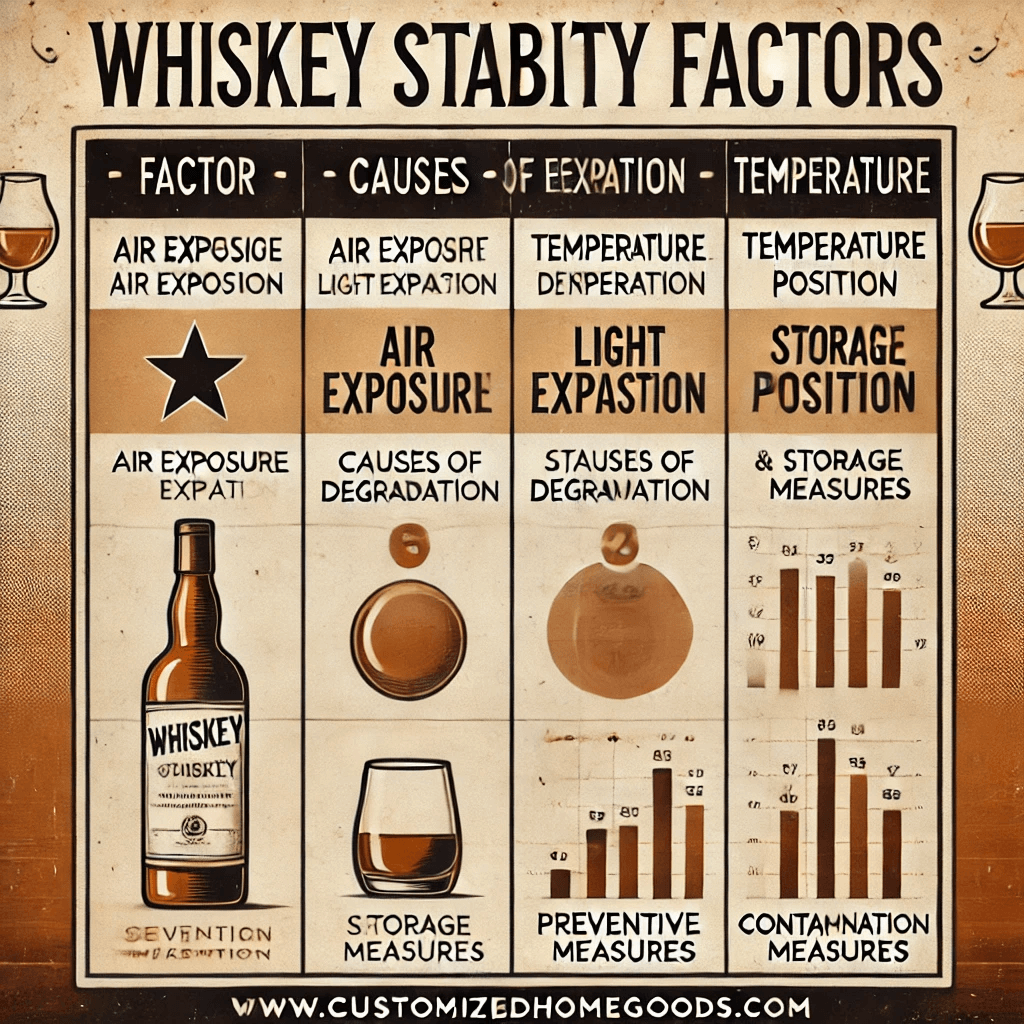
Helpful Chart: Whiskey Stability Factors
Final Thoughts
While whiskey is one of the most durable spirits, it’s not invincible. Knowing how to detect spoilage and taking preventative steps can ensure your bottle remains as enjoyable as the day it was opened. Proper storage and mindful handling are kessential to preserving the flavors and aromas that make whiskey a cherished drink. Cheers to your next perfect pour!